


10 Historic Landmarks and Places You Should Visit in Mexico City
What are the most important historic landmarks and sites in Mexico City?
Mexico City brings together remnants of the pre-Hispanic era, colonial buildings and monuments that tell important chapters of Mexican history. Some of the places where you can explore this heritage include the Palace of Fine Arts, Templo Mayor, the Angel of Independence, the Zócalo and Chapultepec Castle.
If you want to discover the capital's history during your trip, these 10 historic landmarks and sites are a great place to start. Some are close enough to explore on foot, while others require more time to visit at a comfortable pace.
Beyond admiring their architecture, each stop offers a glimpse into a different period of the city, from ancient Mexico-Tenochtitlan to the modern capital.
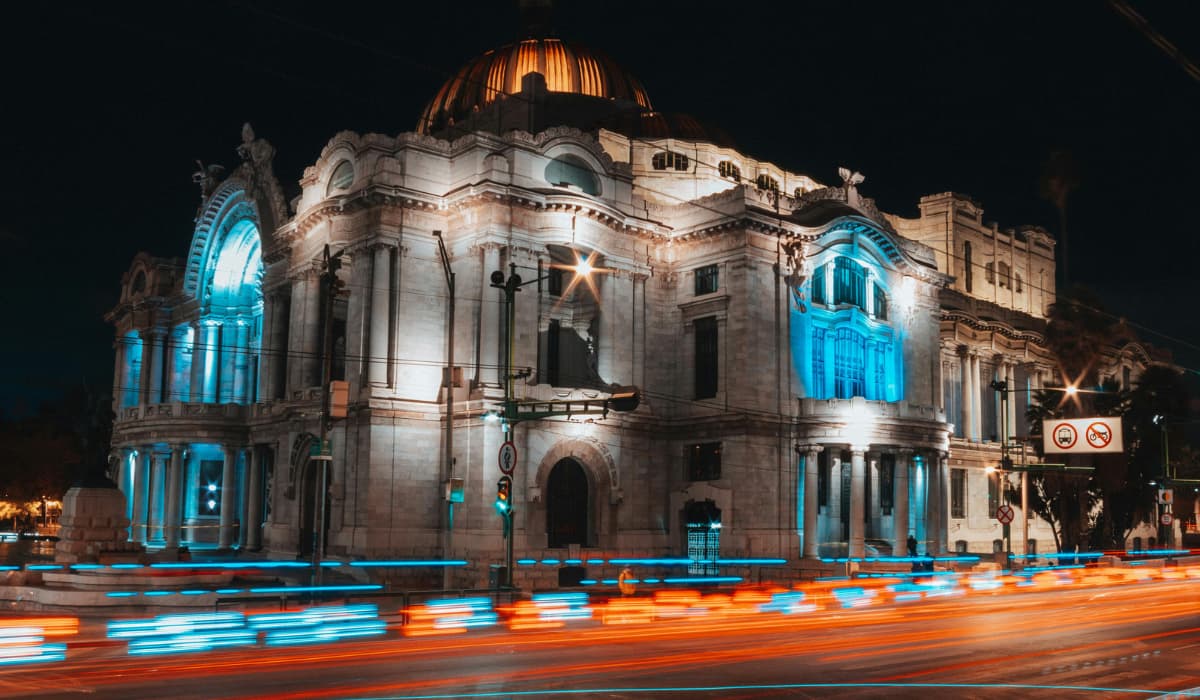
1. Palace of Fine Arts: architecture and culture in the heart of the city
The Palace of Fine Arts is one of the capital's most iconic buildings. Construction began during the presidency of Porfirio Díaz, and the building was inaugurated in 1934. Its architecture combines Art Nouveau elements on the exterior with Art Deco details inside.
In addition to its marble façade, the building is known for its crystal curtain, murals by Mexican artists and its role as a venue for opera, music, dance and other artistic performances.
What can you do during your visit?
- Admire the façade and its architectural details.
- Check the venue's cultural program.
- Explore the murals and exhibitions available, depending on access conditions.
- Walk toward Alameda Central and other nearby historic sites.
Visitor tip: Take time to admire the building from different angles. If you plan to go inside, check opening hours, exhibitions and scheduled activities in advance.
2. Angel of Independence: a symbol of Mexican history
Located on Paseo de la Reforma, the Angel of Independence is one of Mexico City's most recognizable monuments. It was inaugurated in 1910 as part of the celebrations marking the centennial of the beginning of Mexico's War of Independence.
The column is topped by a golden sculpture representing the Winged Victory. Its base features sculptures and spaces connected to the memory of historical figures from the Independence movement.
Today, the monument is also part of everyday city life: it is a meeting point, a place for celebrations and a landmark for visitors exploring Reforma.
What can you do during your visit?
- Take photos of the monument from different points along Paseo de la Reforma.
- Walk along the avenue's central promenade and admire other iconic buildings.
- Combine your visit with a walk through Zona Rosa or other parts of Reforma.
Visitor tip: Visit during the day if you want to appreciate the monument's details and walk around the area. Keep in mind that traffic can be heavy.
3. Templo Mayor: discover the history of Mexico-Tenochtitlan
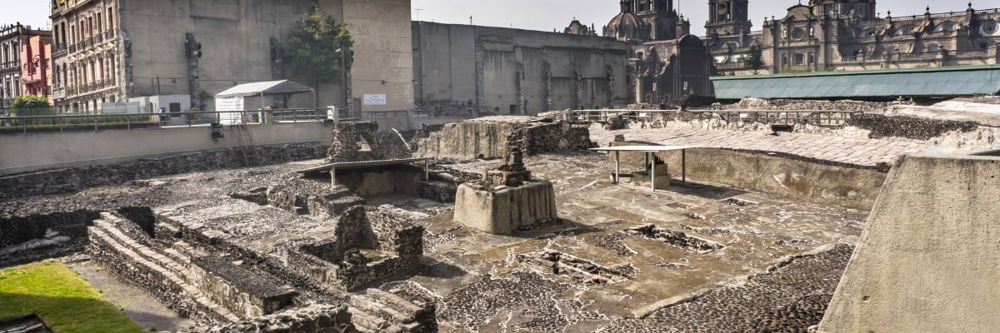
In the heart of the Historic Center are the remains of Templo Mayor, one of the main ceremonial centers of ancient Mexico-Tenochtitlan, the capital of the Mexica people.
The archaeological site allows visitors to see the remains of structures that were part of the sacred precinct of the pre-Hispanic city. The Templo Mayor Museum complements the visit with archaeological objects and information about Mexica religion, social organization and everyday life.
It is an especially interesting stop for understanding how today's city was built on a much older history.
What can you do during your visit?
- Explore the archaeological site.
- Visit the museum to see objects recovered during excavations.
- Observe the contrast between pre-Hispanic remains and the colonial buildings nearby.
- Continue toward the Zócalo and the Metropolitan Cathedral.
Visitor tip: Set aside time for the museum, not just the ruins. Check opening hours, admission fees and access conditions before your visit.
4. Zócalo and Metropolitan Cathedral: the heart of the Historic Center
Constitution Square, popularly known as the Zócalo, is one of Mexico's most important public spaces. Over the centuries, it has been the setting for ceremonies, political events, demonstrations and celebrations.
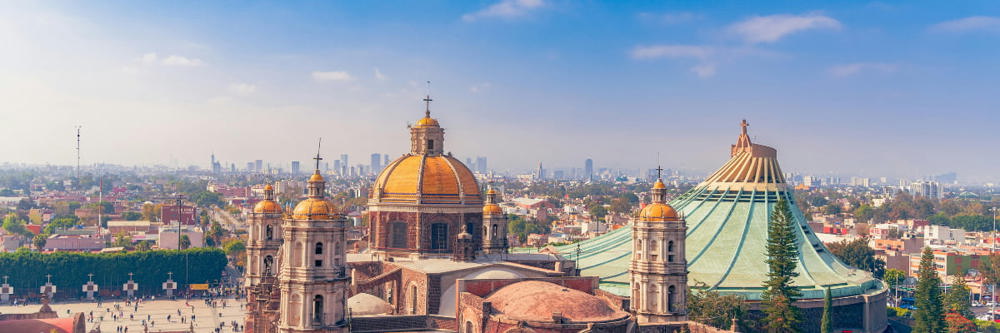
Next to the square stands the Metropolitan Cathedral, whose construction began in the 16th century and continued over several centuries. Its architecture brings together different styles and reflects part of the country's religious and artistic history.
The square and its surroundings offer a glimpse of how different historical periods coexist in one area.
What can you do during your visit?
- Walk around the square and admire the buildings surrounding it.
- Visit the Metropolitan Cathedral, while respecting any religious services taking place.
- Explore the streets and historic buildings of the Historic Center.
- Combine your visit with Templo Mayor and the National Palace, when access is available.
Visitor tip: Wear comfortable shoes and keep in mind that public events may affect traffic or access to certain areas. If you plan to enter nearby buildings, check their visiting conditions separately.
5. Monument to the Revolution: a reminder of a defining period
The Monument to the Revolution commemorates one of the most significant periods in Mexican history. The building began as part of a project to house the Federal Legislative Palace during the presidency of Porfirio Díaz. After the Mexican Revolution, the structure was transformed into a monument and completed during the 1930s.
Its large arch and distinctive architecture make it a landmark in the cityscape. The complex is also home to the National Museum of the Revolution, where visitors can learn more about the events and figures of this period.
What can you do during your visit?
- Admire the monumental structure from the plaza.
- Visit the museum to learn more about the Mexican Revolution.
- Check whether the observation deck is open and review its access conditions.
- Explore the public spaces in the surrounding area.
Visitor tip: Check opening hours and available activities if you want to visit the museum or go up to the observation deck. This will help you plan your time.
6. Chapultepec Castle: history and city views
Chapultepec Castle stands on a hill in Chapultepec Park. Throughout its history, the building has served different purposes. It was a residence for viceroys, the home of the Military College and a presidential residence before becoming the home of the National Museum of History.
Its galleries display objects, documents, paintings and furniture connected to different periods of Mexican history. The building's architectural spaces and panoramic views of the city are also highlights.
What can you do during your visit?
- Explore the galleries of the National Museum of History.
- Discover the courtyards, gardens and indoor spaces open to the public.
- Enjoy views of Paseo de la Reforma and the city.
- Extend your visit with a walk through Chapultepec Park.
Visitor tip: Keep in mind that visiting the castle involves walking through the park and going up a sloping path. Wear comfortable shoes and check opening days, as the museum may have scheduled closures.
7. Monument to the Niños Héroes: a tribute in Chapultepec
The Altar to the Nation, also known as the Monument to the Niños Héroes, is located in Chapultepec Park. It commemorates the military cadets who died during the 1847 United States intervention in Mexico.
Its marble columns and monumental design are part of the country's historical memory. The site is located within one of the capital's most visited green spaces and can be included in a visit to Chapultepec.
What can you do during your visit?
- Admire the monument and learn about its historical significance.
- Walk along the nearby paths and gardens.
- Combine this stop with Chapultepec Castle and other areas of the park.
Visitor tip: You can visit on the same day as the castle, but allow enough time to walk between the different sites and explore each one without rushing.
8. Basilica of Guadalupe: one of Mexico's most important religious sites
The Basilica of Guadalupe, located in the Gustavo A. Madero borough, is one of the country's most important religious centers. The complex includes the modern basilica, inaugurated in 1976, and the old basilica, as well as other buildings and areas of historical and religious interest.
The site welcomes visitors throughout the year, especially during the December 12 celebrations dedicated to the Virgin of Guadalupe.
Even for visitors who are not there for religious reasons, the complex offers insight into an important part of Mexico's cultural and spiritual history.
What can you do during your visit?
- Visit the new basilica and the areas open to the public.
- Admire the architecture of the old basilica and the complex's historic buildings.
- Explore the squares and areas designated for visitors.
- Learn more about the Guadalupan tradition and its importance in Mexican culture.
Visitor tip: If you visit on or around December 12, expect large crowds and possible changes to local transportation. Plan your journey in advance and respect religious activities.
9. National Palace: Mexico's political and artistic history
The National Palace stands opposite the Zócalo and has been connected to Mexico's political history since the colonial period. The complex was built on a site associated with the former structures of the Mexica city and has served different purposes over the centuries.
Inside, visitors can admire murals by Diego Rivera depicting different periods of the country's history, from pre-Hispanic Mexico to later events.
Access to the building may depend on opening hours, official activities, closures or specific requirements, so it is best to check visiting conditions before going.
What can you do during your visit?
- See Diego Rivera's murals when access is available.
- Admire the architecture of its courtyards and historic areas open to the public.
- Include the visit in a route through the Zócalo, Metropolitan Cathedral and Templo Mayor.
Visitor tip: Do not assume you will be able to enter on the day of your visit. Check official notices in advance and plan alternative stops in case access is restricted.
10. Frida Kahlo Museum: a glimpse into the life of a Mexican artist
Known as the Blue House, the home where Frida Kahlo was born and lived is located in Coyoacán. Today, it operates as a museum and offers visitors an opportunity to learn about the life, work and personal world of one of Mexico's most internationally recognized artists.
Its galleries preserve personal belongings, artworks, documents and objects that help visitors understand Kahlo's relationship with her family, identity and cultural context. The garden and rooms of the house are also part of the experience.
Unlike the landmarks in the Historic Center, this museum is in a different part of the city, so it is best planned as a separate outing.
What can you do during your visit?
- Explore the Blue House and its available exhibitions.
- Discover Coyoacán, including its squares, streets and markets.
- Spend time exploring the area's cultural and dining options.
Visitor tip: Check entry requirements and purchase tickets in advance. Availability may be limited, especially during high season.
How to plan a route to explore Mexico City's historic landmarks
You do not need to visit all 10 places in one day. To enjoy the experience, group them by area and allow time to walk, visit museums and explore the surroundings.
Route 1: Historic Center
Places: Palace of Fine Arts, Templo Mayor, Zócalo and Metropolitan Cathedral, National Palace.
This route brings together several of the Historic Center's most representative sites. You can start at the Palace of Fine Arts and walk toward the Zócalo, stopping at places that interest you. Entry to indoor venues depends on their opening hours and visiting conditions.
Ideal for: visitors who want to discover architecture, pre-Hispanic heritage and colonial history in one area.
Route 2: Paseo de la Reforma and Chapultepec
Places: Angel of Independence, Chapultepec Castle and Monument to the Niños Héroes.
You can visit the Angel of Independence and then travel to Chapultepec to explore the castle and the Altar to the Nation. Although these sites are in the same general area of the city, set aside several hours if you want to visit the museum and walk through the park.
Ideal for: travelers interested in urban monuments, national history and outdoor spaces.
Route 3: Monument to the Revolution
The Monument to the Revolution can be visited as a separate outing or combined with other nearby sites, depending on how much time you have and the opening hours of the venues you want to visit.
Ideal for: visitors who want to learn more about the Mexican Revolution and explore another part of the capital's historic landscape.
Route 4: Basilica of Guadalupe
Because of its location in the north of the city, the Basilica of Guadalupe is worth planning as a separate visit. Allow time for transportation and check whether celebrations, closures or large gatherings are expected during your stay.
Ideal for: visitors who want to discover one of Mexico's most important religious and cultural sites.
Route 5: Coyoacán and the Blue House
Set aside a day to visit the Frida Kahlo Museum and explore Coyoacán. You can complement the experience with other cultural and dining spots in the neighborhood, depending on your interests and available time.
Ideal for: travelers who enjoy art, cultural history and exploring traditional neighborhoods.
Tips for visiting historic landmarks in Mexico City
Keep these recommendations in mind to make the most of your visit:
- Check opening hours before heading out. Museums and historic venues may have closing days, special hours or access restrictions.
- Plan by area. Grouping nearby sites reduces unnecessary travel and gives you more time at each stop.
- Wear comfortable shoes. Some routes involve several hours of walking, exploring squares or going up slopes.
- Consider the weather. During the rainy season, bring a light jacket or umbrella. If you plan to walk outdoors, carry water and sun protection.
- Check city events. Demonstrations, celebrations and official events may affect traffic or access to certain places.
- Book in advance when necessary. Some museums and experiences have limited capacity or timed tickets.
- Respect each venue's rules. Religious, archaeological and government sites may have specific visitor guidelines.
Where to stay when exploring Mexico City's historic landmarks
Choosing the right place to stay can make exploring the city easier, especially if you want to visit several historic sites during a short trip.
If your itinerary focuses on the Historic Center, staying in the area makes it easier to reach places such as the Palace of Fine Arts, the Zócalo and Templo Mayor. KALI Centro and KALI Ciudadela are accommodation options you may consider when planning a visit focused on this part of the city.
If you plan to visit other areas, such as Chapultepec, Reforma, Coyoacán or the Basilica of Guadalupe, check distances and transportation options from your hotel. The best location will depend on the places you want to explore, your schedule and how you prefer to get around.
At KALI Hoteles, you can find different accommodation options in Mexico City and choose the one that best suits your trip. Before booking, compare each property's location with your itinerary to make the most of your time in the capital.

Frequently asked questions about historic landmarks in Mexico City
1. What are the most important historic landmarks in Mexico City?
Some of the city's most representative historic sites include the Palace of Fine Arts, the Angel of Independence, Templo Mayor, the Zócalo, the Metropolitan Cathedral, the Monument to the Revolution and Chapultepec Castle. The best selection depends on whether you are interested in pre-Hispanic history, the colonial period, Independence, the Revolution or Mexican art.
2. Which historic landmarks can I visit on foot in the Historic Center?
You can walk to the Palace of Fine Arts, Templo Mayor, the Zócalo, the Metropolitan Cathedral and the areas around the National Palace. Although they are in the same general area, access to the buildings depends on their opening hours and visiting conditions.
3. How much time do I need to explore Mexico City's historic landmarks?
It depends on how many places you want to visit and whether you plan to go inside museums. You can set aside at least half a day to explore several sites in the Historic Center. Visiting all 10 places on this list requires spreading your visits over several days to enjoy each area at a comfortable pace.
4. What is the best time of year to visit Mexico City's landmarks?
You can visit the city throughout the year. If you plan to explore outdoor spaces, check the weather forecast and prepare for the rainy season. If you want to visit the Basilica of Guadalupe during the December 12 celebrations, keep in mind that this is a very busy period.
5. Are historic landmarks in Mexico City free to visit?
It depends on the site. Some public spaces can be explored free of charge, while museums and cultural venues may charge admission. Special rates, discounts, free admission days or restrictions may also apply. Check each site's official information before visiting.
6. Is it safe to visit historic landmarks in Mexico City?
As in any major city, it is advisable to keep an eye on your belongings, use busy routes, take care of valuables and check local conditions before heading out. In crowded areas, follow the authorities' instructions and plan your transportation, especially if you will be returning late.
7. Can I visit several historic landmarks in one day?
Yes. The Historic Center makes it possible to combine several places in one route, such as the Palace of Fine Arts, Templo Mayor and the Zócalo. For sites in other parts of the city, such as Chapultepec Castle, the Basilica of Guadalupe or the Frida Kahlo Museum, calculate travel times and consider planning a separate outing.
8. Which historic landmarks are recommended for a first visit to Mexico City?
If it is your first time in the city, the Palace of Fine Arts, the Zócalo, the Metropolitan Cathedral and Templo Mayor are great starting points for discovering different periods of Mexican history. If you have more time, add the Angel of Independence and Chapultepec Castle.
9. What should I check before visiting the National Palace or Chapultepec Castle?
Check opening hours, days of operation and access conditions through each venue's official channels. Access may change due to official activities, maintenance, events or special arrangements, so verify the information before planning your route.
10. Where should I stay to explore Mexico City's historic landmarks?
If you mainly want to explore the Historic Center, look for accommodation with convenient access to the Palace of Fine Arts, the Zócalo and Templo Mayor. If your itinerary includes Reforma, Chapultepec, Coyoacán and the Basilica of Guadalupe, compare the locations of different accommodation options and their transportation connections before booking.
Discover Mexico City's history at your own pace
Mexico City's historic landmarks offer a way to explore different periods of the country's history, from the Mexica world to the contemporary capital. You can start with the sites in the Historic Center, explore the monuments along Reforma and in Chapultepec, and plan separate outings to discover Coyoacán and the Basilica of Guadalupe.
Planning your itinerary by area and choosing accommodation that suits your travel plans can help you make the most of your stay. Explore the options at KALI Hoteles and find a starting point for discovering the city at your own pace.